Faro
A management system for small businesses (inventory, purchases, sales and transfers between warehouses) with no server of its own, on near-zero-cost infrastructure.
Can you build a useful management system for a small business on infrastructure that costs almost nothing?
Faro is a management system for small businesses, and the experiment is to build it on zero or near-zero cost infrastructure: use free, managed services for as long as they’re enough, and let costs grow only when real usage justifies it.
The idea
Faro is a static app, published for free on GitHub Pages, that talks directly to Supabase:
- Data and authentication on Supabase’s free tier (PostgreSQL and Auth), which is quite generous.
- No application server of its own. Security lives in the database with Row Level Security: every query is checked in PostgreSQL, not in a backend in between.
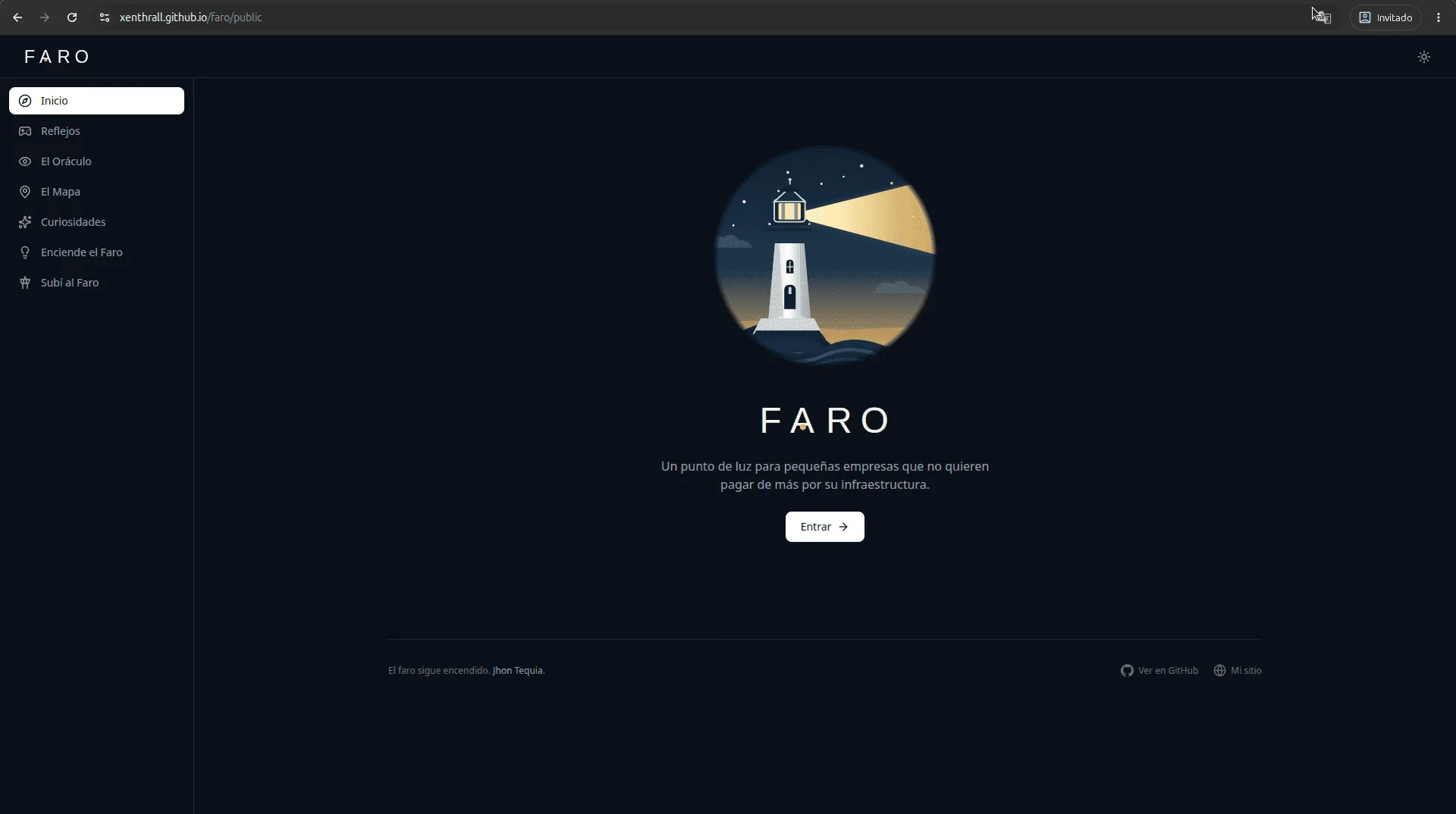 Home · Oct 2026
The demo
There’s a public demo with a shared account: the credentials are already filled in, you just hit Sign in. The data is public, so don’t enter real information.
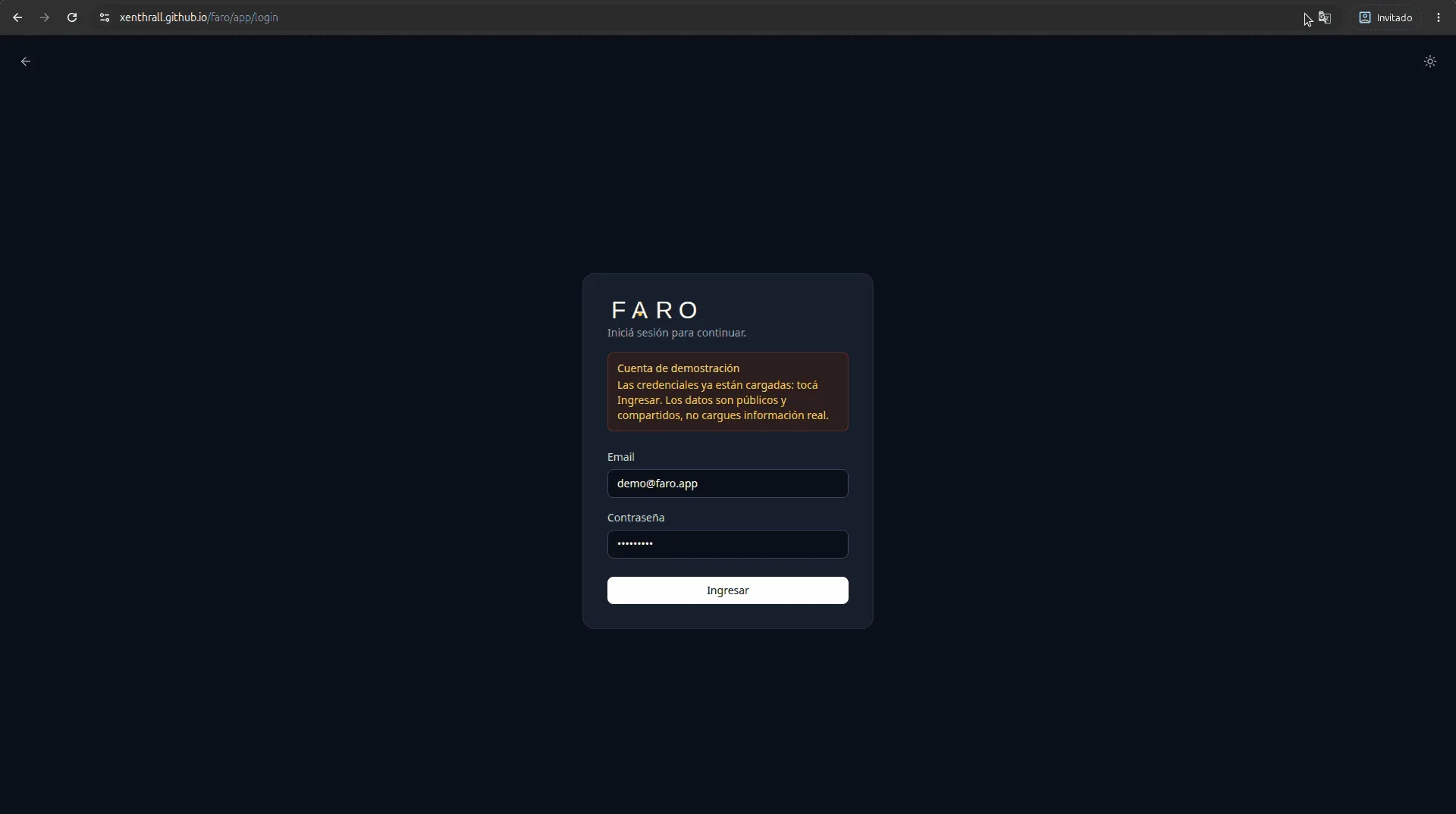 Demo account · Oct 2026
Once inside, a hub brings together access to the panels. Today there’s one, the business panel; users live in the hub so every future panel shares the same list.
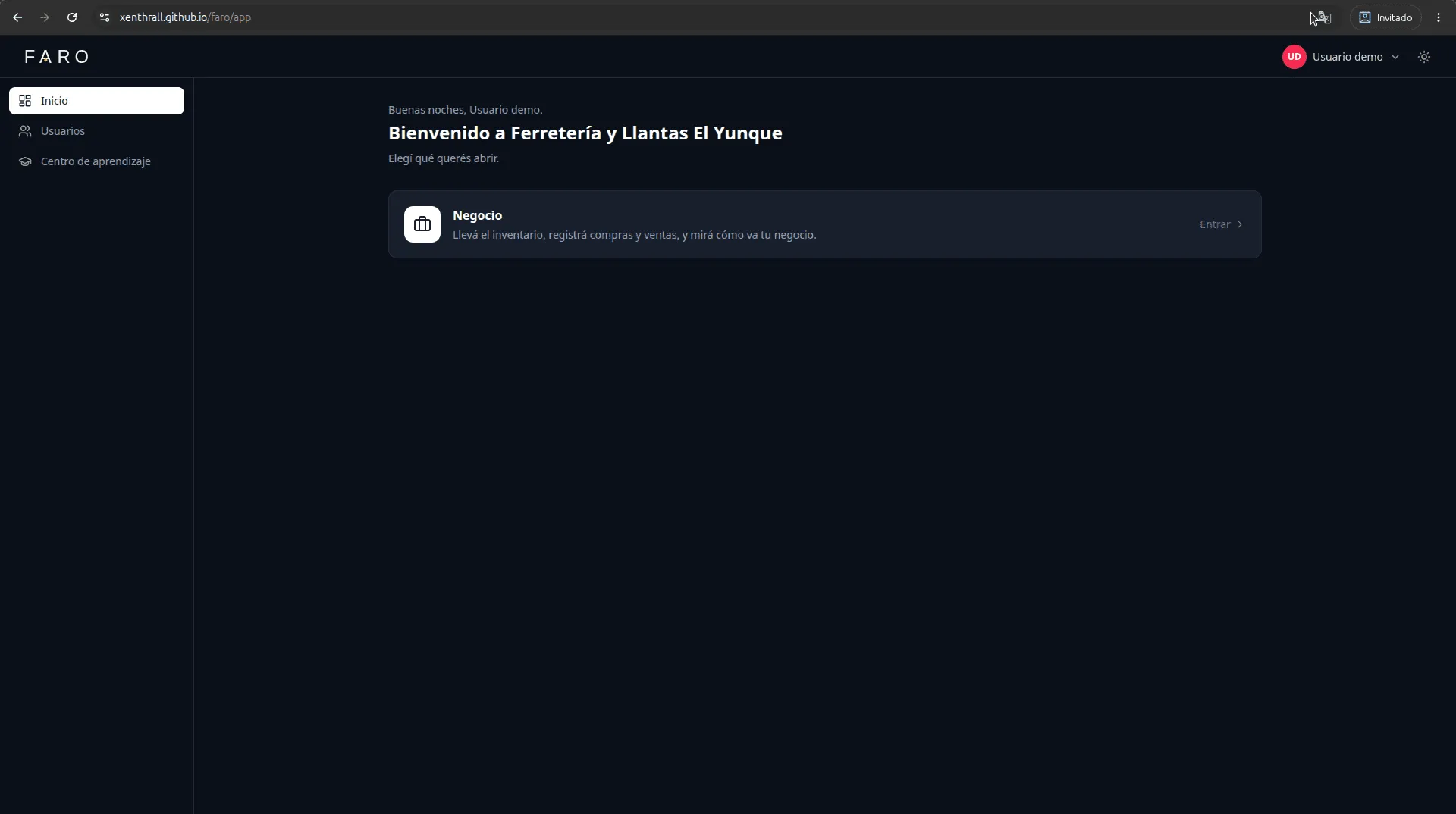 Hub · Oct 2026
The business panel
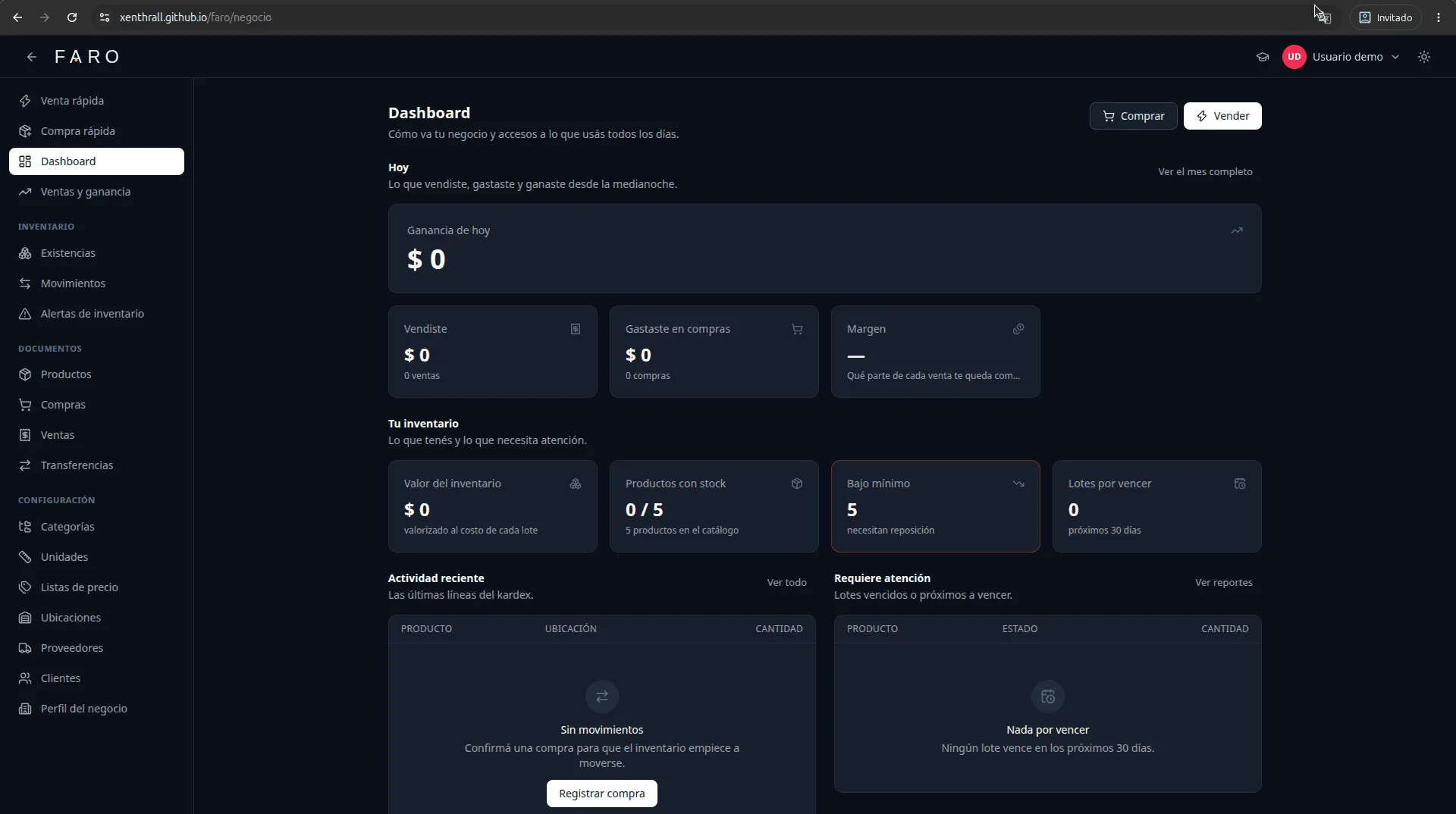
The dashboard sums up the day (sales, purchases, margin) and the state of the inventory: its value, products below minimum and lots about to expire.
To correct stock by hand, without going through a purchase or a sale, there’s a stock adjustment that is also recorded as a movement.
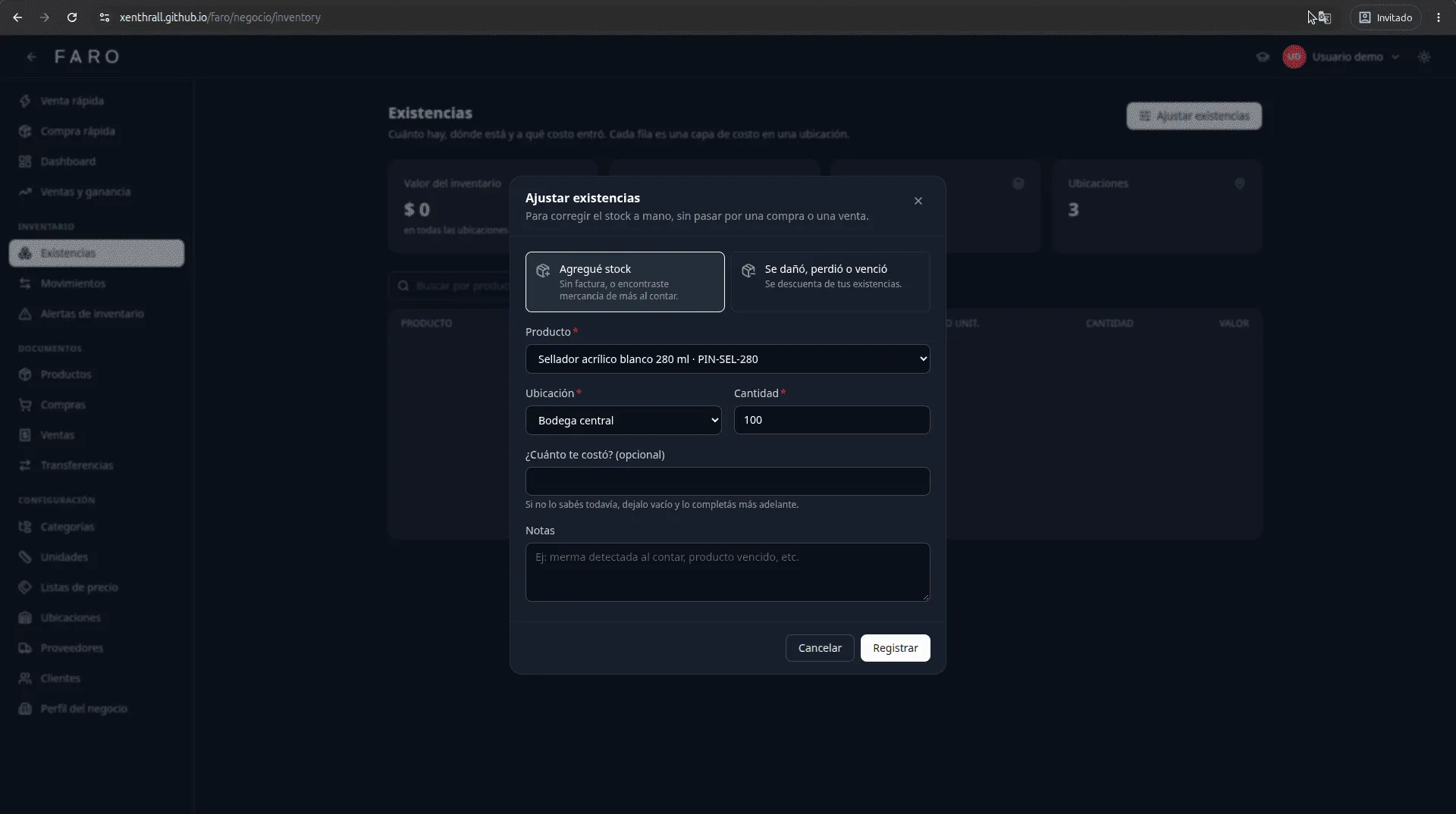 Stock adjustment · Oct 2026
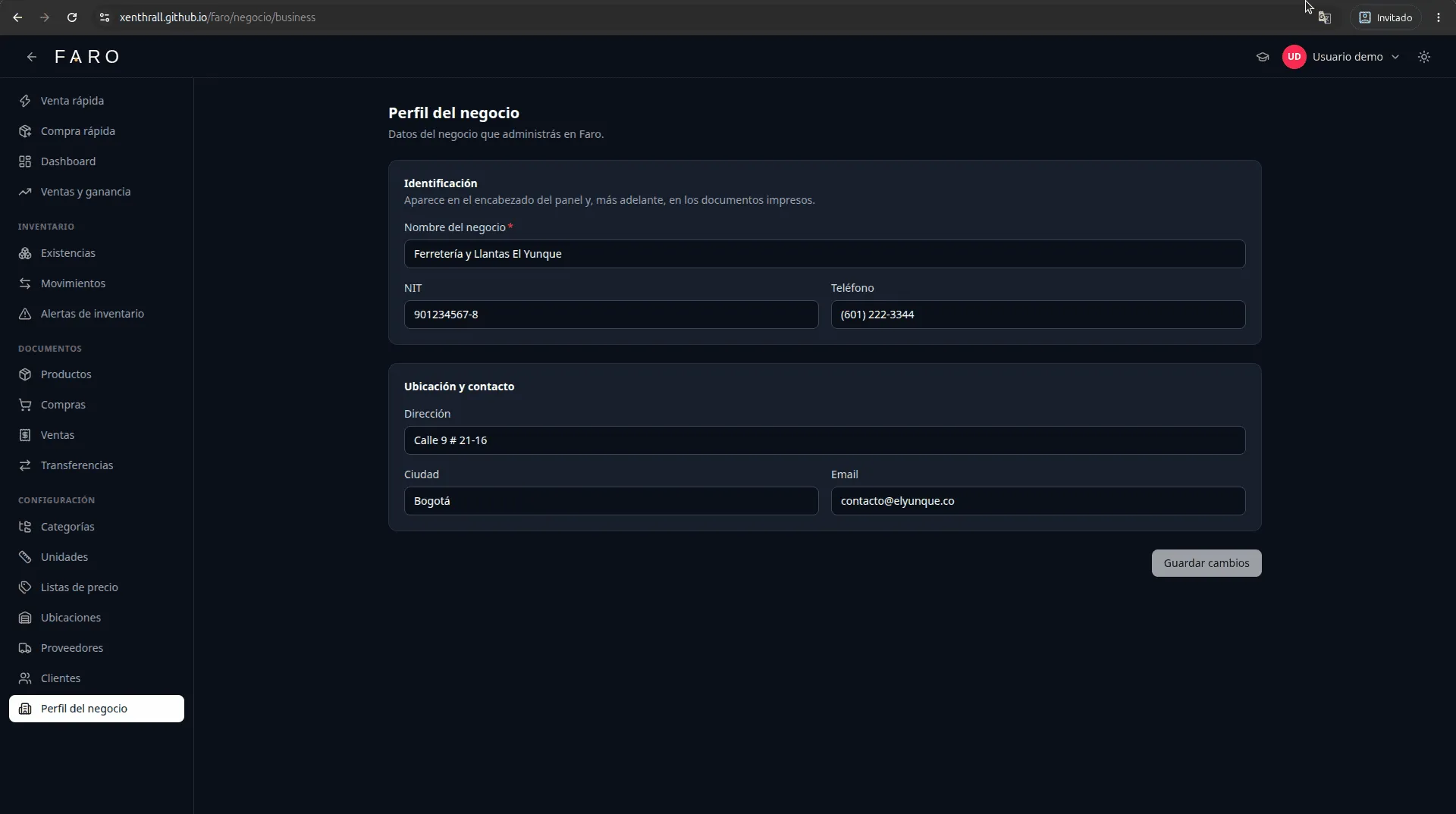 Business profile · Oct 2026
Under the hood
- A generic data model. The first use case is a hardware store, but nothing in the schema is specific to that trade. Every product entry is its own cost layer, so a new purchase never overwrites the previous cost and the inventory can be valued for real.
- Inventory is explained by movements. The quantity of each product at each location is the sum of its stock ledger, not a number you edit by hand.
- A panel framework inspired by Filament. Screens and resources (products, purchases, sales…) are discovered by file: adding one means creating a folder, with no manual registration.
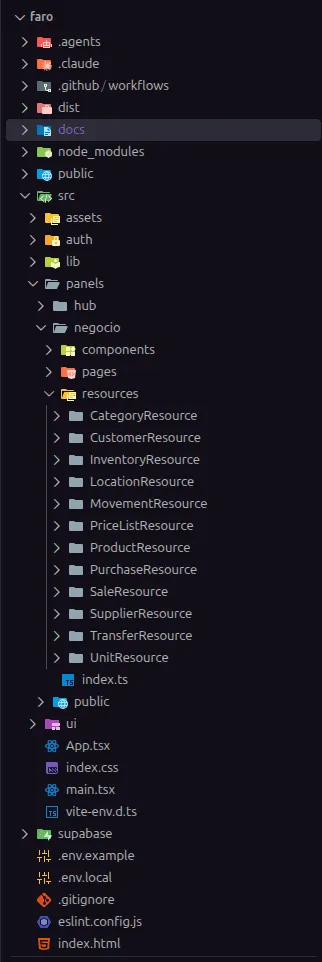 Code structure · Oct 2026